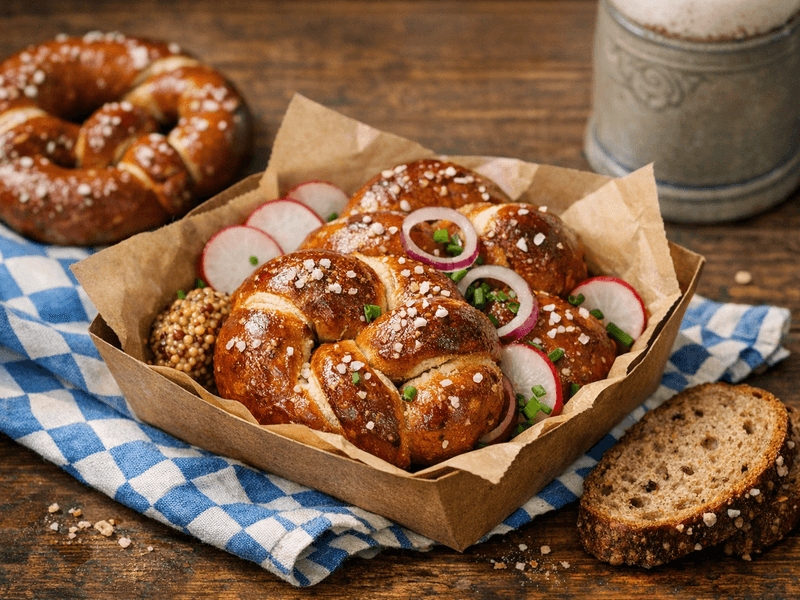
Baguette
Frühstück • Deutschland
Über Baguette
French-style baguette, common in German bakeries
How to Make German Baguette (Traditional & Healthy Version)
The German Baguette, or 'Baguettebrot', is a staple in many German households, especially enjoyed during breakfast. Unlike its French counterpart, the German version often uses a mix of wheat and rye flours, resulting in a heartier texture and a robust, nutty flavor. This bread is prized for its crisp crust and soft, airy crumb, making it an ideal base for a variety of vegetarian and vegan spreads or toppings. In Germany, baguette is commonly served sliced alongside breakfast platters, paired with cheeses, jams, or fresh vegetables, reflecting the country’s love for wholesome, simple ingredients. Baguettebrot is deeply rooted in the German tradition of communal bakery culture. Many local bakeries offer fresh baguette every morning, and families often gather around the breakfast table to share this delicious, warm bread. Its versatility and nutritious profile make it a great choice for health-conscious individuals. Whether enjoyed plain or with your favorite spread, German Baguette offers a satisfying, authentic experience that connects you to the rich bread-making heritage of Germany. Its mild yet distinctive flavor and light texture are perfect for starting the day with energy and taste.
Zutaten(für 2 slices of Baguettebrot (approx. 70g))
- 1 cup Wheat flour (Type 550) (Weizenmehl)
- 1/2 cup Rye flour (Roggenmehl)
- 1 tsp Active dry yeast (Trockenhefe)
- 3/4 cup Warm water (Lauwarmes Wasser)
- 1/2 tsp Sea salt (Meersalz)
- 1 tbsp Olive oil (Optional for richer flavor) - optional
- 2 tbsp Sunflower seeds (Sonnenblumenkerne, for added crunch) - optional
- 1/4 cup Whole grain flour (Vollkornmehl, for extra fiber) - optional
- 1/2 tsp Sugar (Helps activate yeast) - optional
Anleitung
- 1
Combine wheat flour, rye flour, and whole grain flour in a large bowl. Add sea salt and mix well.
3 minutes
Use a sieve to aerate the flour for a lighter crumb.
- 2
Dissolve yeast and sugar in warm water. Let sit for 5 minutes to activate.
5 minutes
Ensure water is not too hot to avoid killing the yeast.
- 3
Mix the activated yeast mixture into the flour. Add olive oil and sunflower seeds if desired. Stir until a rough dough forms.
4 minutes
Add seeds last to retain their crunch.
- 4
Knead dough on a floured surface for 8-10 minutes until smooth and elastic.
10 minutes
Kneading develops gluten for a chewy texture.
Warum dieses Gericht gesund ist
This German Baguette recipe is a healthy breakfast choice because it incorporates whole grains and seeds, which improve satiety, heart health, and digestion. The absence of butter and animal fats keeps the recipe lower in calories and cholesterol. The ingredients are minimally processed, supporting a clean eating lifestyle. Making bread at home allows you to adjust salt and oil amounts, making it adaptable for dietary needs, including weight loss and diabetes management.
German Baguette made with mixed flours offers a balance of complex carbohydrates, dietary fiber, and plant-based protein. Rye and whole grain flours increase magnesium, iron, and B vitamins, supporting energy and metabolic health. Sunflower seeds add healthy fats, vitamin E, and additional minerals for a nutritious boost. The recipe is low in saturated fat and contains no dairy or animal products, making it suitable for vegan diets. Portion control helps manage calorie intake, and the bread’s slow-release carbs provide lasting energy.
Profi-Tipps
- 💡Tip 1: Use a combination of wheat and rye flour for authentic German texture.
- 💡Tip 2: Allow the dough to rise in a warm, draft-free area for optimal yeast activation.
- 💡Tip 3: Place a bowl of water in the oven to create steam and achieve a crisp crust.
Aufbewahrung und Servieren
Store leftover baguette in a paper bag at room temperature for up to 2 days. For longer freshness, slice and freeze. Toast slices before serving to restore crispness.
Am besten geeignet für: Breakfast or Lunch
Nährwerte
| Nährstoff | Pro 100g |
|---|---|
| Energie | 260.0 kcal |
| Protein | 9.0 g |
| Kohlenhydrate | 52.0 g |
| Gesamtfett | 1.0 g |
| Ballaststoffe | 3.0 g |
| Zucker | 1.5 g |
| Natrium | 550.0 mg |
| Kalium | 120.0 mg |
| Cholesterin | 0.0 mg |
| Vitamin A | 0.0 IU |
| Vitamin C | 0.0 mg |
| Kalzium | 25.0 mg |
| Eisen | 2.5 mg |
| Magnesium | 22.0 mg |
| Zinc | 0.7 mg |
| Phosphorus | 55.0 mg |
| Vitamin D | 0.0 IU |
| Vitamin B1 (Thiamine) | 0.3 mg |
| Vitamin B2 (Riboflavin) | 0.1 mg |
| Vitamin B3 (Niacin) | 2.5 mg |
| Vitamin B6 | 0.0 mg |
| Vitamin B12 | 0.0 µg |
| Folate | 70.0 µg |